Our celebration of The Metaworker’s tenth year continues with a look at Cerid Jones’s tenure with us. Like myself, she started as an intern but quickly grew into a peer and highly valued team member. Cerid is a true artist; she has generously lent her creative eye to our digital designs, social media, and Pushcart announcements.

Cerid’s influence is felt in every corner of the magazine. She acts as a guardian of our vision, flagging standout submissions while clearing the path for our submissions manager by filtering works that aren’t quite ready to forge ahead. In her early days, she worked on our podcast episodes, eventually editing and starring in them with equal fervor. Whether she is teaching us new tools to manage our digital presence or working one-on-one with authors on design and edits, Cerid shows up to editorial meetings with contagious excitement. She is also a staple of our Wednesday Writing Sprints, where her consistent presence and contributions help fuel the creative fire for the whole group. She is always ready to champion the next great story or poem, be it from the editors desk or in the trenches with the Writing Sprint crew.
The First Spark: Forging a Path from Aotearoa.

Cerid’s journey with The Metaworker began with a “brave punt” and a leap of faith from her small town in Aotearoa. “Honestly, it was a career pathway I’d always thought was impossible for me (despite it being a dream of mine from a young age), given where I live, in a small town, in Aotearoa. But, I’d just got a job as an intern for a local Indie-Publishing house that I never knew existed, and that boosted my confidence enough to think BIGGER and broader. I took a giant leap, applied for the intern role at The Metaworker and four years later, here I am as the self-appointed ‘international editor’.”
What initially drew her to The Metaworker was our tagline: Where great stories are forged. “It truly rung out to me just as loud as the sing of steel does in a forge,” Cerid wrote, noting her own experience with blacksmithing. After reading “Deer Boy Chair” twice over, she spent hours devouring the backlist. “I’d say 80% of the work I read hit that special place in a reader’s core—that singing steel got louder. I knew I wanted to touch shoulders with such fascinating minds and diverse tastes.”
Making Space: The Ethos of the Round Table.
The Metaworker’s ethos is defined by a community where writers support writers. Cerid sees her role as more than editor; she is a curator of space—literally (when science fiction crosses her desk) and figuratively. “The Metaworker has never limited its definition of ‘great writing’ to fit into anything overtly specific,” she explained. “We don’t care about credentials; what we care about are the stories writers have to tell.”
This eye for the essential is part of Cerid’s unique editorial lens. When asked what she notices in a piece that others might miss, she points to her ‘neurospicy’ brain and a tendency to see associations and symbolic references where others might see a blank wall. “I tend to notice the seeds sprouting between the cracks in the concrete as if they are a whole ten thousand mile forest,” she explained. Finding those seeds is what allows Cerid to recognize the pieces that are brave enough to take up space.
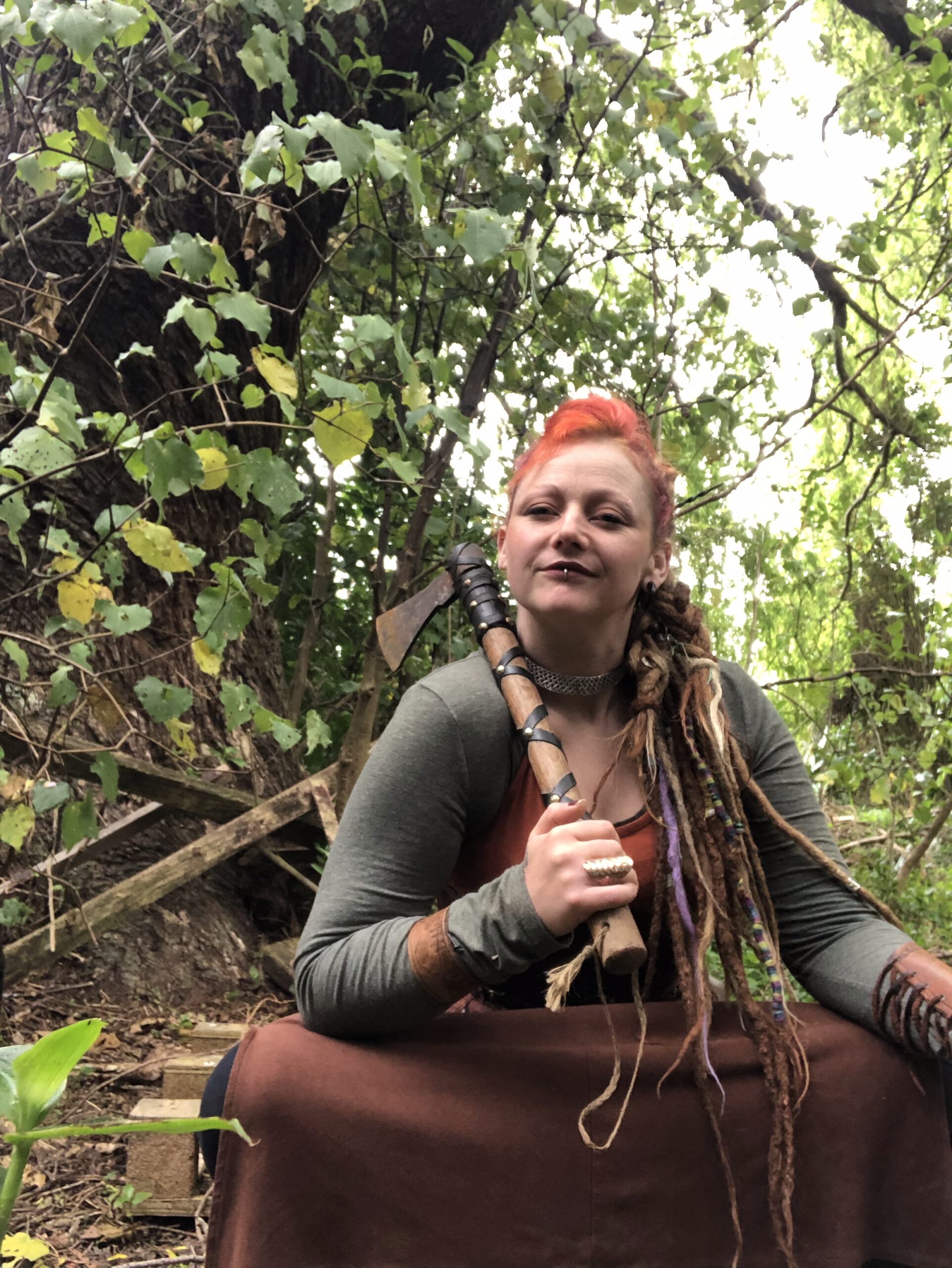
Our commitment to raw storytelling often places the team on a “knife’s edge,” balancing the casual “we’re one of you” ethos with the demands of a high-quality publication that is growing faster than the team can wrap our heads around. For Cerid, that balance is maintained through fierce advocacy for the author and their work.
When pieces hit the editors’ round table, Cerid isn’t afraid to metaphorically “don armor and rage a battle cry” for the stories that feel dangerous or bold. She also encourages others to find pieces they love and are willing to “go to literary war for”, fellow editors and slush readers alike.
These unapologetic truths she fights for can be found in pieces like Clint Sabom’s The Needleman, Shivani Kshirsagar’s The Side Wound of Christ is Intentionally Vaginal, and Jon Kemsley’s A Fair Deal. She had difficulty choosing an exhaustive list, quickly adding Brownie Points by Jennifer Peaslee, A Knight in Shining Armor for a Dad by Maxine Flam, Exit Stage Left by Bob Gielow and Ashmedai and the Hairdresser by Allister Nelson.
These works risk their mettle and leave a lasting mark and are the type of pieces she fights for the hardest.
A successful story often stays with its reader long after being set aside, because the author dared to be vulnerable. Cerid views writing and creativity itself as a magic system where risk is the currency. She champions work that isn’t afraid to break foundational rules or offer jagged honesty that comes from a place of raw vulnerability.
The Fifth Element: Balancing the Breath of Craft.
As mentioned above, Cerid views the creative process as a form of magic, one that functions best when it respects the “fifth element: spirit.” Perhaps more precisely, she links it to a kind of esoteric practice. She explained that “Eastern mysticism teaches balance is key to any ‘mastery’ [as well as] understanding not just how parts work in isolation, but in relation. So from that perspective, I’d say finding the balance is the most important thing about handling writing—or anything really.”
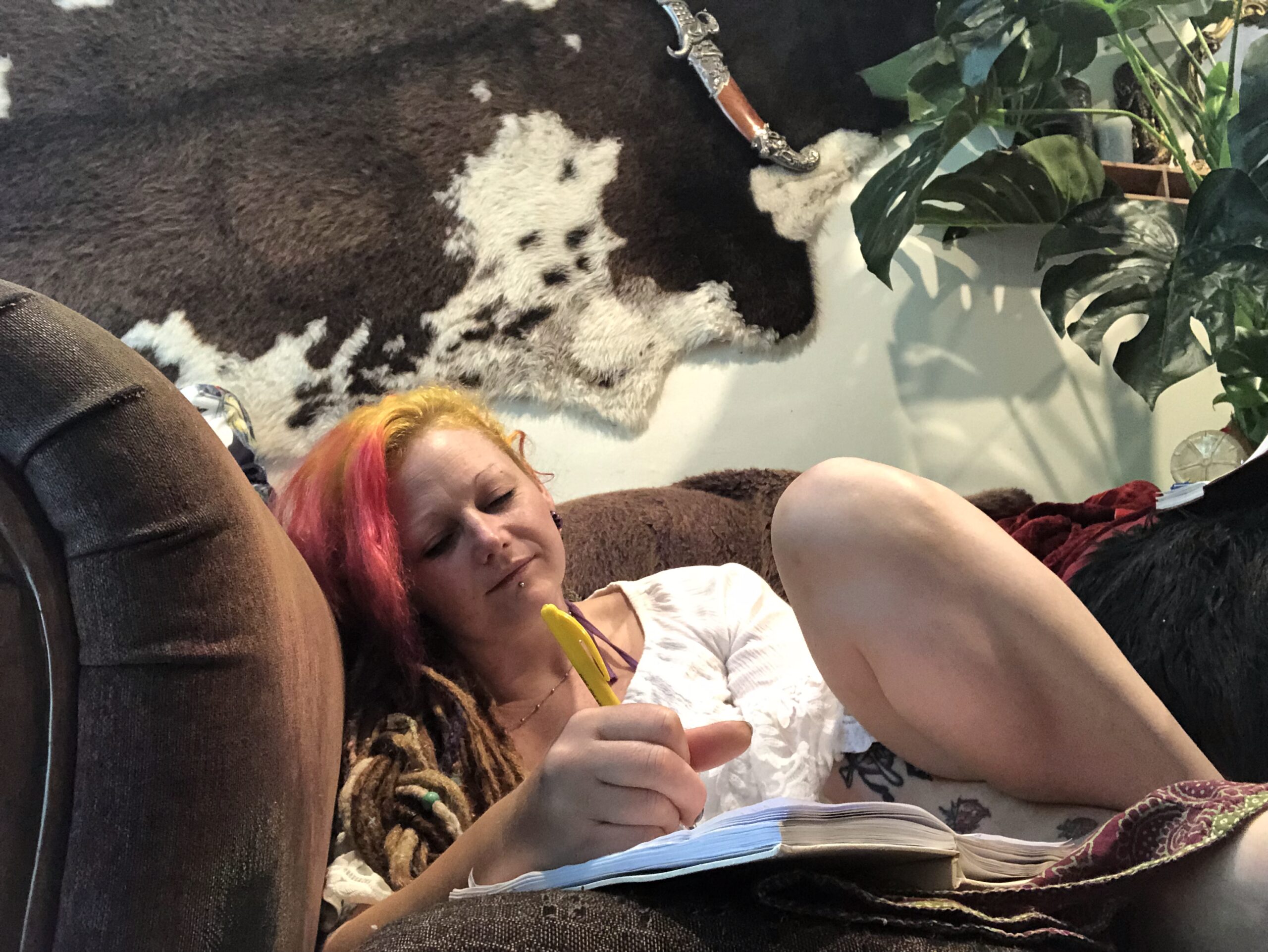
Connected to the spirit aspect, she compared writing to air—ever-present but only witnessed when it moves something else. “That’s sort of what it’s like to handle writing. It’s always there, maybe in a notebook, a monologue in your head, an explanation you give, a silently humming thought, but it stays like air unless we can witness it in its effect on something else.” She advises writers to be mindful of this power, suggesting a gentle touch: “Don’t blow too hard unless you are intentionally trying to uproot something.”
When navigating the “slush pile” or her own drafts, Cerid looks for a trio of honesty, clarity, and intensity. “Honesty is what rests behind everything else,” she noted. “If there is no honesty, how can intensity be believable or earned?” This trio requires a firm grasp of the tools of the trade; Cerid believes that while rules are meant to be played with, a writer must genuinely understand them before they can successfully bend or break them.
Perhaps most importantly for The Metaworker and the writing community, Cerid challenges how we view creative exhaustion. She believes we often mislabel burn out as writer’s block. “Often, when writers are at the point of staring at a blank page, it’s actually because they’ve burnt themselves out creatively by putting too much pressure on the art,” she explained. “When creatives are at the point where their creativity is work, about production value, it adds a contradictory layer to the process. There’s suddenly a pressure for the art to become a product. Unfortunately, this is a harsh reality we all have to face at some point—but balance is important.” To counter this, she champions the importance of play—tapping back into an “inner three-year-old” who explores for the sake of the experience.
When the creative cup is low, but a deadline is looming, Cerid suggests an exercise she calls extraction. “You take an element—I usually roll with character—out of the story and you play with it.” Whether it’s putting a character at a speed-dating event with an alien or watching a terrible 1950s B-movie to kickstart curiosity, the goal is to stop treating creativity as a product and return to the joy of “playing dress up.”
I must admit that her thoughts about creative burnout struck close to home. Her insight and prescription gave me permission to have fun with my writing again. Yet Cerid’s assertion that “art is alive when it’s risking the vulnerability of communicating something that matters” is what spoke most closely to my own work. She says nothing about perfect word choice, sentence structure, or immaculate grammar. All those elements can be present, yet the work can feel lifeless. If I’m hiding behind the rules instead of being vulnerable and writing about what matters to me, then my work is missing its spirit. Her reminder to play, explore, and be curious feels as though she’s pointing to the trail through a dark forest.
The Duality of the Dance: Reality vs. Elsewhere.
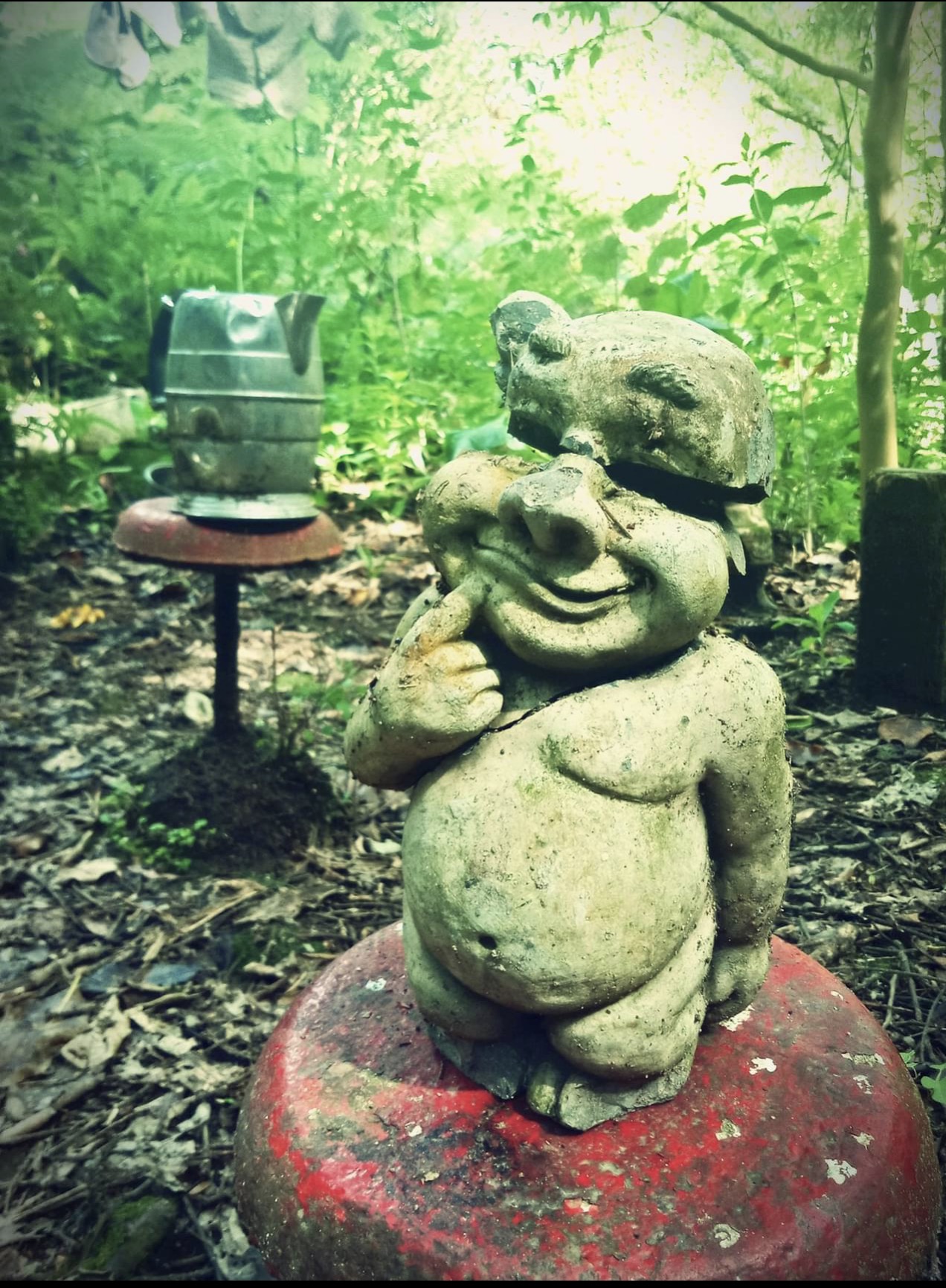
If Cerid’s creative process had a soundtrack, it would be an “endless live stream of variable quality” recorded in a forest under a full moon. It is a sonic landscape where traditional folk musicians and metalheads might be joined by a wandering jazz man, a dancing bear, and “raving lunatics with kazoos and fog horns.” Yet, amidst the intermissions of chaos, everything occasionally aligns for a “profound bit of audible delight.”
This sense of organic, sometimes dangerous, flow extends to her physical rituals. As a trained fire dancer, Cerid is used to managing the literal heat of a performance, and she brings that same intensity to her writing desk. To transition into a creative mode, she might light a fire in her “cauldron” on the patio, surrounded by hides, faux furs, and battery-powered lanterns. Cerid emphasizes the importance of trusting the rhythm and the mechanics in both fire dancing or writing.
She admitted that the learning process involves “dropping a lot and hitting yourself,” recalling a time at nineteen when she foolishly wore a tutu to fire spin. She went on to explain, “I’ve never really thought about this before, trusting yourself is a big part of learning how to spin. I’m mostly self taught now these days, but I was lucky to have some pretty awesome instructors in my early days. You have to pay attention to how things feel, be able to move with the flow of the weight–or at least that’s how I learnt–feeling your way through and trusting the rhythm will guide you in what you’re trying to do. I guess that’s a pretty similar skill to the creative process. Paying attention to how things feel and trusting you know the mechanics well enough to feel your way through it.” While the tutu didn’t survive the mild blaze, the lesson did: creative practice is about painting over the “not quite right” parts until you find a flow state where you’re simply “dancing with it.”
The alignment of chaos and delight is a natural byproduct of Cerid’s multifaceted background. As an artist with an Honours Diploma in Art and Creativity, she has explored everything from needle felting to award-winning Shakespearean acting. These pursuits, coupled with a double BA in Cultural Anthropology and English Literature, provide the rich soil from which her writing grows.
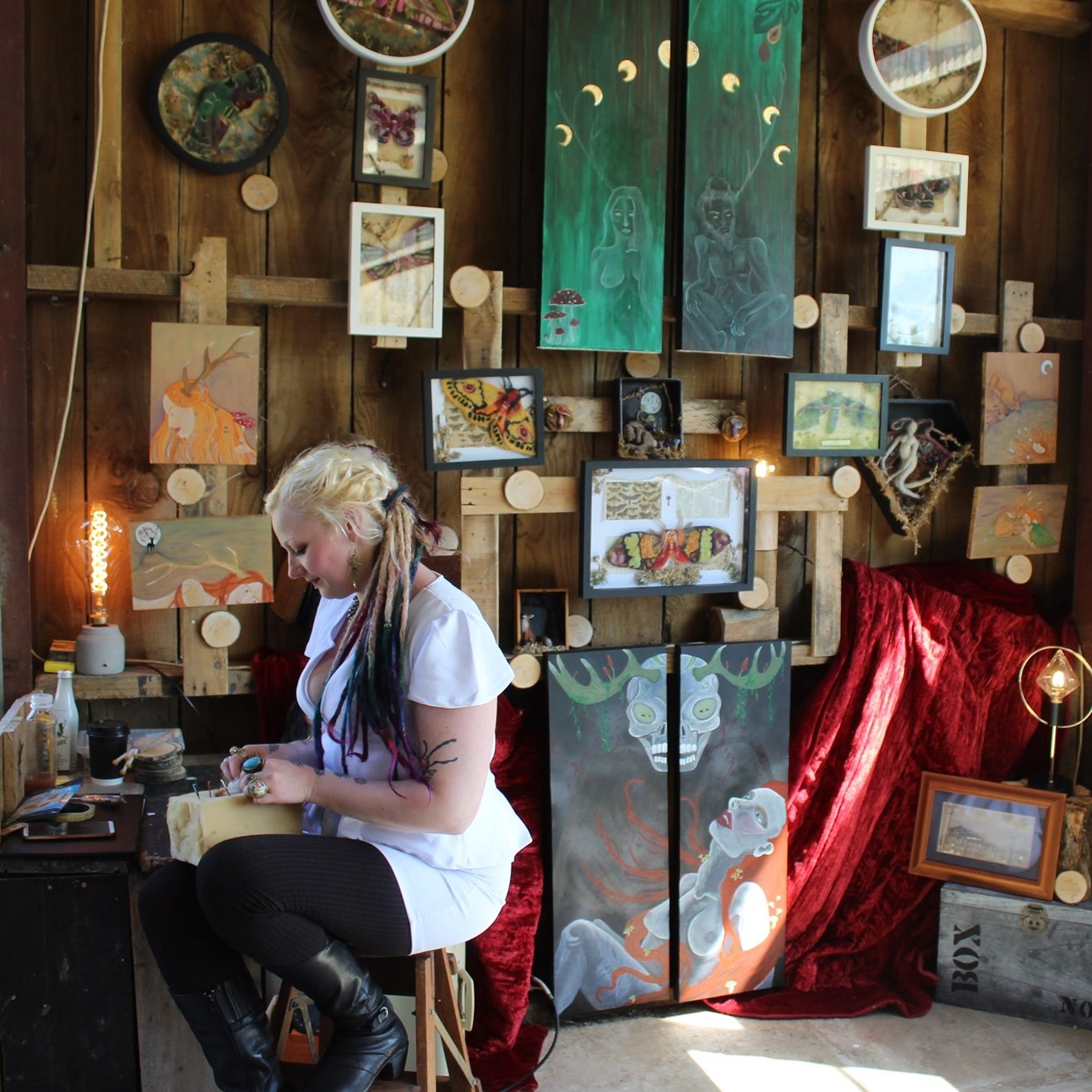
She describes herself as a “full immersion” creator who doesn’t so much ground herself as “give over to the art.” In a state of full flow, she stops being herself entirely and becomes a “vessel” for characters. She explained, “When I was a young adult, I used to write on the train. I did a lot of people watching and that would often spark something fictional in my notebook. Once I watched a woman with short ginger feather hair sniff and rub her nose, and that was all it took for a character to begin to form. Within an hour or so of making notes and exploring, ‘Copper’ was more real to me than the sniffing woman who inspired the character. I’m almost 40 and Copper still lives in my head. She’s harder to pull out but if I ‘call’ her, I can bring her into a clear picture and try to engage her. Ironically, that character isn’t very chatty by nature, so it’s a bit awkward.”
This layer of story over reality is why she believes all good creatives have “one foot in reality and one foot elsewhere.” It’s a duality reflected in her own life: those who might have met her during her previous work at an art gallery in her “fancy pretentious aesthetic” would be shocked to find her on weekends behaving like a “feral critter at a bush doof rolling around in the mud.”
When she isn’t deep in a scene, Cerid maintains a discerning eye for literary tropes. While she acknowledges that every trope has its place, even if they don’t all belong in her specific ‘forest,’ she is vocal against the modern misuse of “morally grey” characters. She argues that true complexity is found in characters like Han Solo—the “anti-hero blueprint” who starts with a grey moral compass and develops into a hero, rather than a character whose questionable actions are merely misunderstood all along.
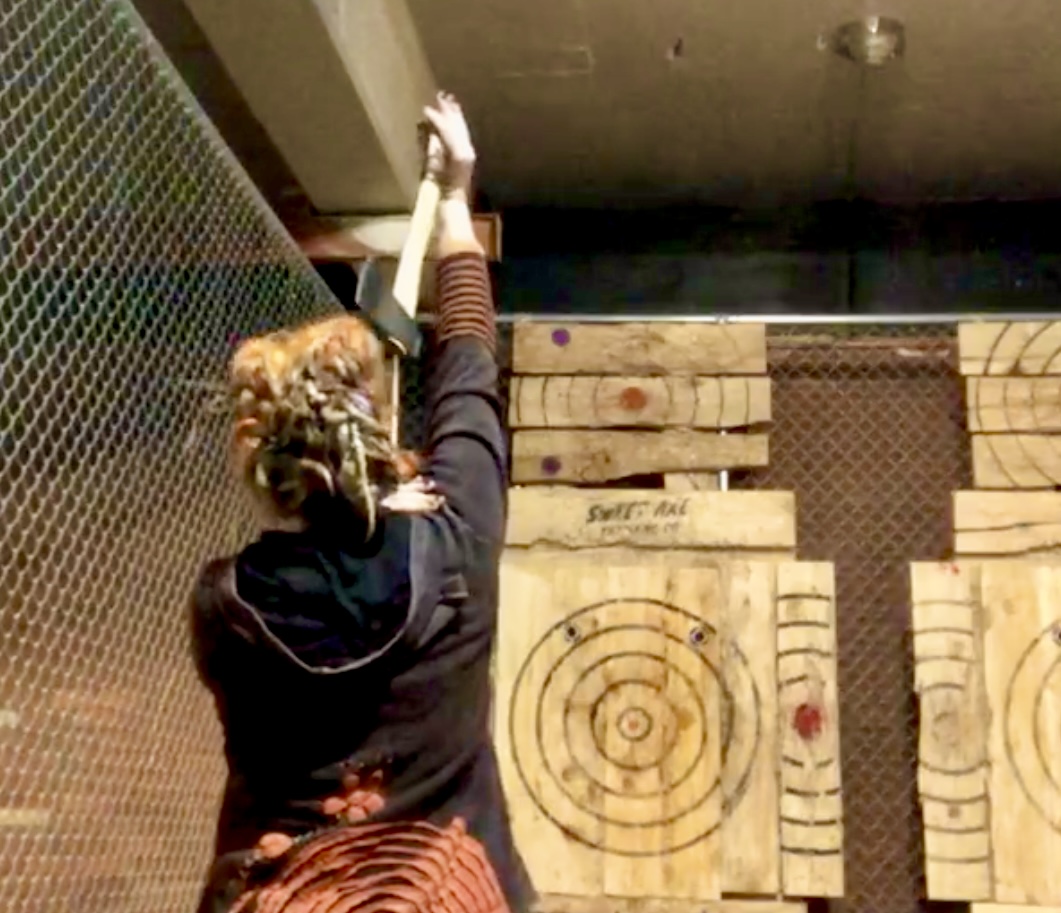
This same commitment to authenticity defines her approach to failure. Whether she is struggling with a manuscript or reflecting on her time as an axe-throwing instructor—where she admits she landed a lot of “floors instead of fours”—her reset ritual is consistent and honest. When she misses a mark with the axe, she doesn’t repress her disappointment and frustration. She stands back at the line, mock-yells at the target in a silly accent, then takes a deep breath and tries again.
She brings that same theatrical energy to the keyboard when a scene isn’t landing. “I’ll make faces at myself, maybe mock-yell at a character, or make rude gestures at the keyboard,” she admits. By treating the keyboard like the throwing line, she can shake off the frustration, check her posture, and “lock in” until the flow returns and she nails the throw. However, if the “lock in” doesn’t happen, she isn’t afraid to pivot entirely. Cerid notes that her tendency to change tools when things get stuck is a vital part of her process—though she jokingly admits it’s likely why she has yet to finish a long-form work. Honoring those “weird brain pathways” and finding the tool that fits the moment is more important than forced production.
The Future: A Call to Curiosity.
Looking ahead to the next decade of The Metaworker, Cerid has one hope for every reader and writer who encounters the magazine: that they leave feeling curious.
“I hope readers discover things that take them in a curious new direction on some unexpected but connecting level,” she wrote. For the writers, her wish is even more profound. She hopes they become curious enough about other voices and stories that they find the courage to submit their own. To Cerid, the spirit of The Metaworker is about being brave enough to forge a path ahead of what was previously believed possible.
The Metaworker has always been about the breath of new ideas and the enduring spirit of the writing community. With Cerid at the helm of the submissions queue, that legacy is in good hands. She’s ready to find the next voice that keeps our community breathing, growing, and inspired.
Don’t miss a single chapter of our 10th-year staff series. Sign up for our newsletter to receive Melissa’s interviews, staff updates, and the latest from our Discord community delivered directly to your email.