[1827 words]
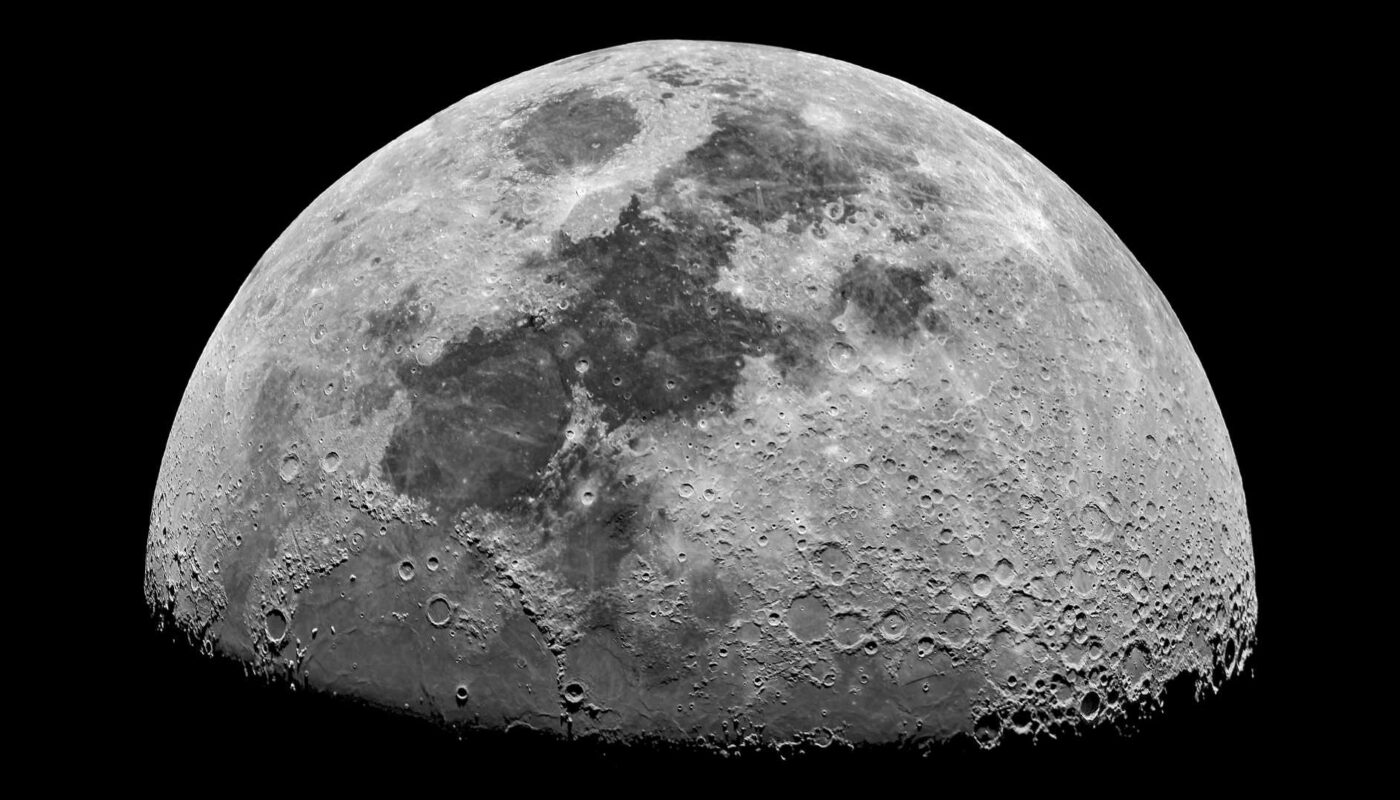
I missed the last blue supermoon. An anomaly within an anomaly, they were thirteen years apart. A blue moon, of course, isn’t blue, but it is an extra moon that month — with all the astrological havoc you would expect from such a thing. Only about 3% of moons are blue, and only about 25% are super — when the moon is extra close to Earth. I suppose I simply hadn’t found the time. Things were different then, everyone’s life full of frenetic activity that didn’t mean much outside of its contribution to GDP. Five-day work weeks, meetings with no purpose. We were all just filling the void, a place the moonlight could never reach.
When it finally returned in 2037, though, I sat outside my apartment, transfixed, staring up at it. Its silver light danced through the leaves of the trees, bathing my little brick patio in an eerie perfection.
When was the last time I sat and looked up at the moon like this? A fuzzy memory came to me, sleeping outside as a teenager, bundled up with a bunch of high school friends on my cousin’s trampoline. We’d end up soaked when the morning dew came, but I remember feeling so free. There was no weight to looking then. Nature simply was — a beautiful, impossible thing. I hadn’t yet discovered the dread I’d come to associate with beautiful views. The “this is beautiful but we’re destroying it” mentality that became so inextricable from the changing climate.
Finally, I didn’t have to carry that anymore. I guess I just needed the supermoon to realize it was truly gone. The climate, fully stabilized after the Stockholm Protocol, was finally back to pre-industrial-revolution levels of carbon. The summers in Chicago were back to 80-degree highs, and fall began when it was supposed to. We all wore wool again like union soldiers — though the omni-recycled wool sweater squeezed around my shoulders was probably a good bit softer than the ones Abraham Lincoln wore…
Behind me, I heard the ding of my apartment’s solar system through the open windows. I laughed, turning to squint through the darkness of my kitchen, where the battery’s register light had flipped on.
“You’re awfully bright,” I said, bowing my head in reverence to the moon.
Of course, with the perovskite panel windows on my place, the specific wavelengths of light I could capture had broadened significantly from the old polysilicon days. Between the combination panels, the wind towers on every corner, and the hydrogen power/water facility at the end of the block, free electricity in those days was a given. What I most liked about it, though, was the golden glow my place had when the sunlight hit the windows. It was like being on the inside of an egg, the world holding me in its warm embrace until I hatched.
I poked at the plant nearest to me on the patio. A giant rubber plant nearly as tall as I was, it only lived on the patio in the summer. Would the plant think it was daytime under this brilliant moon? Would it try to photosynthesize, earning enough energy for another leaf?
Now that I got so much from the sun, I felt a little like a plant myself. That and I’d jammed my place with them… My apartment had 243 plants in it by then — and enough micro-LEDs to grow a farm’s worth of tiny vegetables. It was the one thing I’d wanted to do when I submitted my UBI grant applications.
What do you intend to do with your grant stipend? the form had asked.
Grow a lot of plants.
Now, I felt like a 22nd century farmer, a serf with no lord, plying my neighbors with beautiful vegetables. In a strange way, it was like we’d finally gotten enough technology to get back to where we started — where we belonged.
In the beginning, we were simply cavemen, thrilled to master fire. What was a fire, after all, but a tiny star? But then, we spurned the sun, digging as deep as we could into the earth. We dug up dinosaur bones, hiding ourselves away in fluorescent-lit offices, the bulbs fueled by smokestacks belching darkness. But now, we were solar beings once again, in tune with the universe because of our technology.
The only strange thing was how long it took us. We’d had enough technology to solve climate change by 2010, nearly twenty years before we did so, the constant thrust of modernity shuttling us along a pre-laid track.
Not that I blame anyone. We’re all both victim and perpetrator in this game of life. Besides, change is hard. Humankind has always had a status quo bias. Pass a man with a stick in his eye, and he’ll stop you from pulling it out, assuring you he likes things the way they are. But now, we can be glad the status quo runs in the other direction. A city warden tried to remove our local hydrogen facility — promising a bigger one a mile away — and people protested day and night until the plan was scrapped. I mean, I was for the larger hydrogen facility, but it’s still nice to see people rallying to keep a technology they were so vehemently against just ten years ago.
I finally got up, dusting off my pants as I gave the moon one more smile. Because of the supermoon, there was going to be a special night market in the square, and I had to get to harvesting.
Stepping inside, the walls of my apartment were like a tapestry of twinkling stars, the micro-LEDs in various states of growth promotion. The pots themselves – filled with nanobots scurrying about with micronutrients – let out a chorus of soft chirps. Some wanted more water, others more compost. Most, though, were content.
I opened my palm projector, looking at the list of vegetables that might be ripe. Honestly, it wasn’t a half-bad harvest. Turning a dial on my arm band, the grow lights changed, turning to a pale blue wherever I was meant to pick.
I grabbed a wicker basket, dragging along my little ladder as I went from shelf to shelf. Slowly, it filled with an impossible bounty. Leaves of kale, tomatoes, cucumbers — all of them plump and full of flavor. I gently pulled a few micro-carrots from the soil rack, brushing them off before adding a tiny pepper. There were onions and potatoes, each one a tiny jewel of color. I even managed to pluck a lemon from the tree I’d started two years before. Its grow light basically never turned off to achieve something quasi-tropical in Chicago, but the flavor was almost good enough to eat like apples.
When my basket was finally full, I headed down to the street, walking in the direction of the square. Many of my neighbors were heading in the same direction, and I waved to the ones I knew. The train whooshed by on its elevated tracks, the outlines of people just visible in the glowing windows.
Already, the square was full of tables, the vendors of the night market in various stages of preparation. It was a cornucopia of human delight, the many manifestations of UBI grants come to life. Under the potentialist framework, the basic income system didn’t care what you did, just that you did something.
There were a handful of actors rehearsing a scene beneath the train tracks. There was a knitter making finger puppets – many of them already on the hands of children who ran between the market booths. There was even a man grilling hot dogs, his grill powered by a small solar array he’d dragged into the moonlight.
“Hey, hey!” I called, stopping by Mary’s table. There was a mountain of chocolate in front of her, her tiny candies worked into fanciful shapes. There were cats with tiny pretzel legs and a herd of little chocolate dinosaurs.
“Just the person I was hoping to see,” she said, smiling.
“Is that so? And what is it you think I have in my basket here?”
She’d been raving about my lemons since the first one came off the tree, and was planning a citrus line of chocolates for the end of summer.
“I know you got the goods,” she said, holding out her open palm. “Don’t hold out on me now.”
I smiled, putting a lemon in her waiting hand. She held it up, like a tiny second moon, its round, yellow shape almost green in the blue-ish moonlight.
“This will do very nicely indeed,” she said, tucking it away. “And what would you like?”
I surveyed the chocolate menagerie, finally landing on a white chocolate pterodactyl.
“How do you get these shapes so precise?”
“Trade secret,” she said, winking. Looking in both directions, she opened one of her nearby containers, revealing a hand-carved mold.
I went through the rest of the market, my basket slowly changing from vegetables to a bevy of other goods. I’d traded the kale for a loaf of bread, the onions for a comic book. By the time I reached my own stall at the end, I only had tomatoes left. I set them out one by one, arranging them in a little pile of color. More people would come – I could already see some walking over from the train station – and I couldn’t wait to see what they wanted to trade for.
Leaning back in my chair, I popped the pterodactyl in my mouth, closing my eyes. I let it melt onto my tongue, the moonlight dancing over my eyes as the trees above me swayed in the wind. It was beyond delicious. It could have been the atmosphere of the night market, but it felt like it might be the best thing I’d ever eaten.
And, most importantly, after so many years of fear and darkness, I could truly enjoy it. I could savor it, knowing that the moments I spent here weren’t taking away from work elsewhere. Now I only had the work of being alive, of giving back to the earth just as I took from it. This was what humans were meant to be. Circular, net-positive, in tune with the world. I suppose, looking back, I only wish I’d had the faith to know this day would come.There had been so many days filled with shame and angst, so many times I couldn’t even look at the moon without mourning the world’s passing. But it was never either humans or the earth. It was always meant to be both / and. Don’t get me wrong, living involves its share of taking. We have to eat enough to stay alive, get enough Vitamin C to keep our teeth from falling out. But our taking can give back too. If the world ever ends again, I hope I can remember that. We’ll survive. We’ll live. And the moon will be waiting for us at the end.
JH Tomen lives in Chicago and works in clean energy. When not writing fiction, he is the author of the climate Substack, The Carbon Fables. You can find him on all socials @jhtomen