
[2971 words]
It was a relentlessly pleasant day in Virginia Park. Sunshine needled through the clouds. A tourist couple sipping their $10 lattes on a bench swore they could smell the ocean two miles away. The local toddlers, leaping through the water jets, shrieked. A fitness instructor barked at his clients chucking medicine balls at each other. Their sweat splattered on the hot pavement.
On a rock at the far corner of the basketball court, Cassie sat and sobbed into the sleeves of her sweater. The sweater still smelled like her husband’s cologne, even though she couldn’t remember the last time she hugged him.
An hour ago, she had sunk onto this rock and hadn’t stopped crying since. She had never been one to emote in public, but her choices were either at the park or at home with her husband. Nobody looked in her direction, except for a skinny blond woman pushing a double stroller – she stole furtive glances as she hurried by. The sight of little knuckleless hands reaching beyond the sun shade made Cassie cry even harder. Sweat and tears glued her dark hair to the sides of her face.
Cassie heard squeaky wheels rolling across the basketball court. Assuming it was the blond woman circling back to either complain about this Brown woman creating a public spectacle or – worse – attempt to console her, Cassie folded forward and buried her face in her lap in a feeble attempt to disappear.
A small hand with bony fingers dropped on her shoulder. Cassie looked up. Hovering above her was an old woman with long strings of colorful wooden beads dangling from her neck and a tattered bandana tied around her head. The old woman had parked her metal wire basket cart filled with plastic bottles next to her. Swiping at the tear trails on her cheek, Cassie recognized the old woman almost immediately: whenever she was out on her daily 6am run, she always spotted this woman digging through a residential dumpster in one of the neighborhood alleys. Up close, Cassie couldn’t believe this tiny woman could haul herself into those dumpsters.
This thought was her first reprieve from grief in two weeks.
The old woman gestured to Cassie to stand up. She flung her grey hair in a heavy braid over her shoulder and, with surprising strength, pulled Cassie to her feet.
“What is your name, apo?” the old woman asked in a thick Filipino accent.
“Huh? Oh, er – Cassie, my name is Cassie,” Cassie said. Blushing, she tried to straighten her sweater and brushed the rock dirt off the back of her jeans.
“Is that short for Cassandra?” the old woman asked. Cassie nodded.
The old woman paused, brows furrowed, as though considering whether this name fit the distressed thirty-something in front of her.
“Okay, Cassandra,” she said, finally, “you can call me Nanay Maribel. Come, come. My apartment is just across the street.”
Cassie blinked. Apartment? She had always assumed that this woman who collected bottles from dumpsters every morning was homeless. It had always made her feel guilty for running right past her instead of stopping to offer a few dollars.
Nanay Maribel started across the basketball court, basket cart singing with every step. Cassie’s only other options were to resume her park cry or to go back to her own apartment and her husband. And besides, she thought to herself, her family was on the other side of the country, and she has been missing having an elder nearby. Sighing, she jogged after the strange old woman.
♦
Nanay Maribel lived in the far corner studio on the third floor of a bright pink apartment complex. Her front door was crowded with pots of succulents and cacti.
“Psst, put on some tsinelas,” Nanay Maribel said, pointing with her lips at the basket of assorted slippers. As Cassie untied her sneakers, Nanay Maribel opened the door. She yanked her basket cart over the lip of the entrance and disappeared into the apartment.
“Come, apo!”
Cassie grabbed a pair of woven slippers that were too small and followed Nanay Maribel’s voice.
On the other side of the door, Cassie coughed. A dense, earthy smell permeated the apartment. Nanay Maribel scurried about, lighting candles on the bookcases lining the walls, the round wooden table in the middle of the room, and the windowsill. Underfoot, at least seven rugs overlapped and covered the floors. There were several piles of blankets and cushions, scattered about like anthills.
Cassie rubbed her eyes, adjusting to the dimness. She glanced at the candles illuminating the bookcases. It looked like there were a billion little flames – except they weren’t all candles.
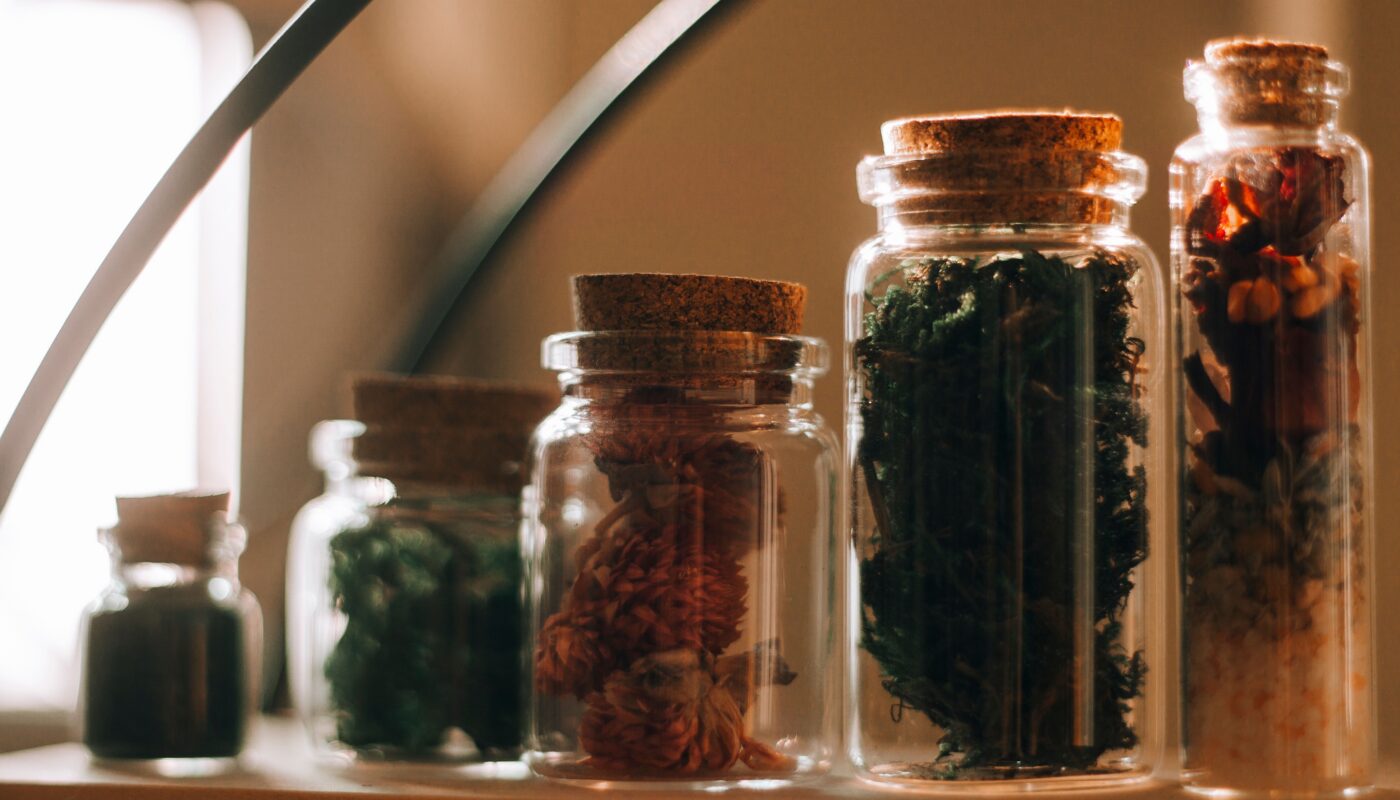
Dozens of glass jars stood in rows and rows across each shelf, reflecting the flickering candlelight in eerie harmony.
Nanay Maribel muttered about aching joints as she dragged the basket cart over the rugs. Cassie followed her into a small kitchen tucked in the back of the apartment. The window above the counter was wide open. Huge bamboo wind chimes hung in front of it. Standing on her tiptoes, Nanay Maribel pawed a kettle off a shelf and set it on the stove.
“So, Cassandra, where are your parents from?” she asked, lighting the stove.
“Oh, the Philippines –”
Nanay Maribel looked at Cassie, amused.
“Yes, apo, I know that. But where in the Philippines are they from?”
“Oh, right, um – well, my dad’s from Ilocos Sur and my mom’s from the Visayas – the, uh, Western Visayas,” Cassie fumbled, feeling like a child.
“Aha!” Nanay Maribel exclaimed, startling Cassie. “I knew you were Bisayan! It’s the nose, see,” Nanay Maribel stroked the bridge of her own nose with her finger. “So you know about hilot, yes?”
Cassie shook her head, shifting back and forth in her uncomfortably snug tsinelas.
Nanay Maribel raised an eyebrow and clicked her tongue. Cassie averted her eyes, taking inventory of the room. More shelves on the walls, more glass jars. In the kitchen light, Cassie could make out their contents: flowers, dehydrated peppers, dried leaves, mysterious clear liquids, powders of many colors.
“What are all of these spices?” Cassie asked.
“Those, apo, aren’t all spices,” Nanay Maribel said with a secretive smile. “This is the business of an albularyo.”
As if on cue, the kettle on the stove screeched. Nanay Maribel turned off the stove before turning back to Cassie.
“An albularyo heals ailments, treats injuries, delivers babies –”
Cassie looked down at the floor. She felt Nanay Maribel’s eyes on her. The silence was deafening.
Nanay Maribel began unloading dirty jars from her basket cart. She cracked each open, sorting the lids into one side of the sink and the jars into the other.
“It’s an ancient practice,” Nanay Maribel continued. “We are chosen, then taught by the elders. My mother knew I was an albularyo because I was born breech,” Nanay Maribel grinned proudly.
Nanay Maribel sprinkled half a box of baking soda over the lot and cranked the hot water. The old plumbing groaned with effort.
“Of course, nowadays, many think that we are witch doctors, using black magic to curse the innocent.”
As the sink filled, Nanay Maribel bent over to massage her knees. Her right one cracked. Nanay cursed.
When she recovered and straightened back up, she asked, “so tell me, Cassandra. What ails you?”
Cassie chewed the inside of her lip. Her nose began to tingle again. Maybe she should’ve just stayed in the park, she thought to herself. She didn’t have to explain anything to anyone there.
Her eyes darted around the room, settling on a framed picture of a young girl above the stove. The print seemed too modern for it to be a picture of Nanay Maribel.
“Is that your daughter? Granddaughter?” Cassie asked.
Nanay Maribel was quiet for a moment. “Yes, that was my granddaughter,” she finally said.
They stood there long enough for the bubbling water in the sink to come to stillness.
Eventually, Nanay Maribel gestured Cassie to sit on a pile of cushions in the other room. Cassie obliged. Then Nanay Maribel waited.
Cassie sighed.
“I’ve wanted to have a baby for years, now,” Cassie began, the words suddenly tumbling out, “but the timing with my career and my husband’s career just hasn’t been right. But recently – recently, I thought the timing was finally right, and we talked about it, and then my husband and I finally tried to, um, conceive for the first time, and it was just…well, magical,” Cassie blushed. “After we – er, finished, he just, like, immediately regretted it and spiraled. He just started yammering on and on about all the reasons why he isn’t ready – ” Cassie’s voice broke “ – why he still isn’t ready. And, I dunno. He was talking, but all I could think about is how if we did conceive, we would have a little July baby. Maybe he – I feel like it would’ve been a boy – would’ve been born on my mama’s birthday. And I thought about how excited my dad would be when we told him that he was going to have his first grandchild. And what it would be like to hold my baby for the first time against my chest, all slimy and alive –”
Blinking furiously, Cassie stared up at the ceiling.
“Anyways. I took the morning after pill. I dunno. I’ve just been so sad since I lost him.”
Nanay Maribel snorted. Cassie snapped her head straight.
“What, do you think this is funny?” Cassie glared at Nanay Maribel.
“Well, yes,” Nanay Maribel repressed a smile. “It’s funny that you think you lost him.”
Cassie shook her head. “What do you mean, I think I lost him?”
“That’s just not how it works, apo. See, the spirits – those who died, those who haven’t been born yet – they’re all around us,” Nanay Maribel said, sweeping her lanky arms around the room. “The Europeans agree with us albularyos on this, too. It’s the law of conservation of energy, no? ‘Energy cannot be created nor destroyed.’” Nanay Maribel readjusted the cushion underneath her.
“Your baby isn’t lost, Cassandra.”
Cassie unclenched her jaw, then clenched it again. She stared at Nanay Maribel, unblinking.
Then, she burst out laughing.
A full-bodied laugh.
She gripped her abdomen and threw her head back into the cushions. She hooted and gasped for air. When she couldn’t laugh anymore and her cheeks were sore, she wiped tears from her eyes.
Her whole body slumped, exhausted.
When she looked up, Nanay Maribel was glaring. Her grimace pronounced the wrinkles around her eyes. Pushing off the cushion, Nanay Maribel stormed off to the kitchen. Cassie heard cabinets open and slam shut.
Moments later, Nanay Maribel returned with a steaming ceramic mug with a broken handle. She placed it on a bookcase and started sifting through the glass jars on the shelf above. From the back row, she weaseled a short, stout one – former pickle jar, Cassie guessed – and opened it. With a wooden spoon from her pocket, Nanay Maribel scooped some of the jar’s contents out: some kind of dried leaf that looked like thin, brittle straw, hacked into small pieces. She dumped the spoonful into a white marble mortar that Cassie hadn’t noticed was sitting on the bottom shelf. With a heavy matching pestle, she ground up the herb. A light grassy scent wafted around the room.
Nanay Maribel scraped the powder into the mug. With the wooden spoon, she stirred the powder and hot water twelve times clockwise, twelve times counterclockwise, then six times clockwise while chanting something under her breath.
When she put the mug on the rug in front of Cassie, the tea was still spinning.
Nanay Maribel plopped back down on her cushion. She stared at Cassie expectantly. Watching the herb dissolve before her, Cassie asked what it was.
“Tawa tawa. It clears up congestion of all kinds – releases whatever is stuck.”
Cassie cleared her throat. “I’m not sure if I should take this.”
Nanay Maribel cocked her head to one side.
“Well, do you want to see your baby or not?” she asked.
“See my baby?” Cassie repeated blankly. Nanay Maribel nodded.
Cassie hesitated. She had imagined what her baby would look like, of course: her husband’s curly hair but black like hers, dark brown eyes, her teeth, her husband’s nose. Sometimes, when nobody was around, she’d practice saying her baby’s name out loud. If she saw him now, would he recognize her? What would she say? Would he be able to understand her?
Is Nanay Maribel crazy?
Is Cassie crazy for wanting to trust her?
Outside the front door, another resident on the floor fumbled loudly with their keys. Cassie’s hand flew to her own pocket, feeling the outline of her keyring through her jeans. The sounds of wrong key after wrong key rattling in the keyhole broke through the thin walls of Nanay’s apartment. The neighbor cursed and kicked the door. Cassie heard their footsteps thunder back down the hall.
Picking up the mug, Cassie blew on the surface of the tea. Across from her, Nanay Maribel tapped a finger on her leg impatiently. Cassie cautiously took a sip and immediately pinched her lips against the bitterness. Nanay raised an eyebrow. Throwing the mug back, Cassie finished the tea in a couple of big gulps. She winced.
Nanay Maribel beckoned for Cassie to lie down on the rugs. She lifted Cassie’s head, put a pillow beneath it, and brushed her hair aside. As she stroked Cassie’s long hair, Nanay Maribel’s hand trembled. Cassie closed her eyes. She felt Nanay’s strong fingers pinching down the fronts of her arms, thumb and index gripping the sides of her biceps. In a low voice, Nanay chanted something. Nanay’s necklace of wooden beads dangled above her face.
♦
In the shadowing room, on the layers of rugs, with the bitterness of tawa tawa coating the insides of her mouth, Cassie felt dumb. She should have stayed in the park. Nanay Maribel was now pushing and pulling the muscles on the tops of her legs. Cassie wondered how much time had passed since she entered this strange woman’s apartment. The bamboo wind chimes in the kitchen tapped each other, bassy wooden notes echoing through the apartment. Listening closely, Cassie could still hear the kids screaming and giggling in Virginia Park across the street.
One kid’s giggle sounded particularly clear: sharp and bright in a major key, like glass wind chimes.
On the backs of her eyelids, there was a fuzzy shape. Probably one of those light spots you get from squeezing your eyes shut too tight, Cassie thought to herself. She relaxed the corners of her eyes, the space between her eyebrows. She thought she heard the giggle again.
Nanay Maribel put her palm beneath Cassie’s collarbones and pushed – hard.
As the air unwillingly left Cassie’s body, she sank backwards. Her insides fell down past her spine, past each rug, past the ground under the apartment complex.
The amorphous blob fell with her. It sped up. As it got closer, it got bigger. Its outline was a blur, though Cassie could have sworn she saw curly hair. The more Cassie squinted at it, the louder the glass chimes got. Louder and louder and louder. The shadowy thing did a little wiggle, as though it was dancing for her. Cassie reached out to touch it. Paused. Wondered if it was safe. It seemed to reach out toward her.
The glass chimes were getting quieter, she realized.
Then she couldn’t hear them at all anymore.
The curious form began dissipating sideways, particle by particle, powder dissolving in water.
♦
When Cassie opened her eyes, her face was wet. Her arm stretched out in front of her, fingers grasping at nothing.
She dropped her arm and it thumped against the ground, lighting up her funny bone. She sharply sucked air through her teeth. As she rubbed her elbow, she heard scrubbing and glass jars banging against the kitchen sink.
Cassie clambered to her feet. She almost fell over. Her legs had fallen asleep. She dragged her iron-filled limbs to the bookcase where Nanay Maribel had ground the tawa tawa. Leaning against it for support, Cassie noticed a small mirror on one of its shelves. The candles flickering behind her illuminated the features of her face: high, round cheekbones, big lips, bushy eyebrows that could never mask her feelings. She tucked her hair behind her ear. For a split second, she thought of her husband’s hand grazing her neck.
Next to the mirror was a porcelain vessel, the size of a coffee can. Intricate designs in deep shades of oceanic blues wrapped around it. It was the only container on the shelves that wasn’t transparent.
It’s an urn, Cassie realized.
Cassie quickly scanned the room to make sure that Nanay Maribel wasn’t hovering over her shoulder. She heard the sloshing of soapy water across the apartment. Nanay had started humming to herself.
Gingerly lifting the lid as though it was molten, Cassie opened the urn. Even with the nearby candles, she couldn’t see the ashes inside. She wondered whose ashes they were: what their life had been like, how much Nanay must’ve loved them to have their remains on her shelf, whether they were alone when they died. Briefly, she thought of the picture of Nanay’s granddaughter in the kitchen. She shook her head.
Gripping the edge of the albularyo’s bookcase with one hand, Cassie reached her other hand into the urn. The ashes were cold on her skin as she scooped them in her palm. She hovered her hand above the mouth of the urn. She let her fingers float apart. The ashes spilled between her knuckles, particle by particle. Nothing destroyed.
In the distance, she could hear the clinking of glass. It sounded like a child’s forgiveness, like his willingness to wait.
K. Degala-Paraíso (she/they) is an NYC-based Filipinx-American writer. Her work has appeared in [PANK] Magazine, ANMLY, and elsewhere; and has received nominations for the Pushcart Prize, Best Small Fictions, and Best of the Net. She teaches creative writing and aspires to be a mushroom in her next life. More: kdegalaparaiso.com.


